Test results drive the recommendation
We never assume a home needs a softener just because the neighborhood does. The hardness test decides, and if the numbers come back low, we say so.
Hard-water fixes installed in a single day · (281) 213-0981

Hard Water, Handled
Hard water is the norm across Sugar Land, from homes off Williams Trace Boulevard to the newer streets in Riverstone. We confirm it with a hardness test, then put a correctly sized softener in place, usually in a single day.
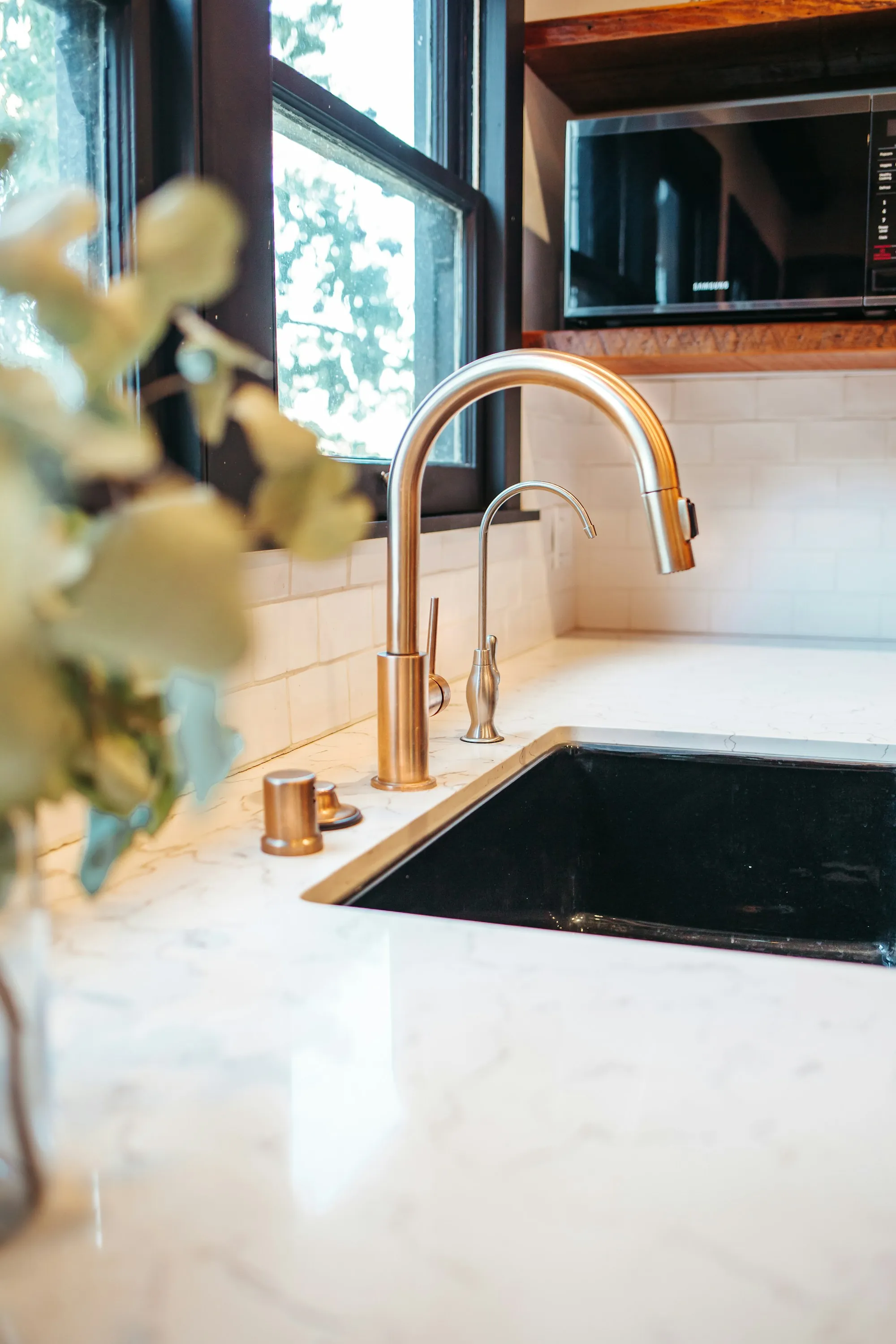
White crust around faucets, cloudy shower glass, and dishes that come out spotted are the usual signs, and in Sugar Land they show up in most homes sooner or later. The cause is calcium and magnesium carried in from the Gulf Coast aquifer wells that feed part of the city blend. Sugar Land Water Filtration provides water softener installation that removes those minerals before they reach your fixtures, your tankless heater, or your dishwasher.
Softening is often a genuinely worthwhile fix here, but we still recommend it only after a hardness test confirms the numbers. A typical visit starts with that test, moves to a written quote, and ends with a softener installed, programmed, and loaded with salt the same day.
A softener only performs as well as its sizing and setup. Here is what each installation covers from start to finish.
We measure hardness in grains per gallon, check for iron, and multiply by your household's daily use. That grain count sets the resin volume, so the unit regenerates on a sensible schedule instead of constantly.
Larger homes with several bathrooms need more resin and a higher flow rating to keep pressure steady. We match the tank to your peak demand rather than defaulting to a one-size model.
A demand-initiated valve counts the gallons you actually use and regenerates only when the resin needs it. That saves salt and water compared with older timer-based units.
We place the brine tank where refills are easy and load the first bags of salt. You can choose sodium chloride or potassium chloride pellets.
A bypass lets you isolate the unit for service or run unsoftened water for a project. We label it clearly so the whole family knows how it works.
Many homeowners prefer hard water at sprinklers and hose bibs to save salt. We review your plumbing and route the softened loop to match those preferences.
Regeneration water goes to a laundry standpipe or approved drain through a proper air gap. That keeps wastewater from ever siphoning back toward the tank.
Tankless units are common in First Colony, Telfair, and Greatwood, and scale wears them down quickly. Softened water keeps the heat exchanger cleaner and makes descaling visits less frequent.
Chlorine and chloramine can wear down resin over time. Where your test results show it, we add a carbon stage ahead of the softener to protect the bed.
We set the hardness value, regeneration time, and salt type on the controller, then run a manual cycle. You get a short walkthrough on adding salt and checking the brine level.
A technician tests a sample from your kitchen tap and from the line near the main entry. You see the hardness and iron numbers on the spot, along with a quick look at where the softener would sit. The visit usually runs under an hour.
Using the test results and the number of people and bathrooms, we recommend a resin size and control valve. The written quote lists equipment, labor, and starting salt, with nothing tucked into fine print. You decide on your own timeline, and many customers book the install for later the same week.
On install day we shut off the main, cut in the bypass, set the tanks, and connect the drain. After programming, we run a regeneration cycle and test softened water at a faucet. Most installs take a single day, and you're covered with a salt schedule before we pack up.
We never assume a home needs a softener just because the neighborhood does. The hardness test decides, and if the numbers come back low, we say so.
An undersized softener runs out of capacity and lets hard water through, while an oversized one can sit idle and waste resin. Our grain-count method lands in the middle, built around how your family actually uses water.
Garage installs here face summer heat and humidity, so we place tanks on a level pad, away from heater exhaust, and within easy reach for salt refills. It is a small detail that keeps the system dependable.
If your faucets wear a white crust or your dishwasher leaves film on glasses, a hardness test is the logical first step. We can schedule it this week, and if a softener makes sense, most installs are finished in a single day.